


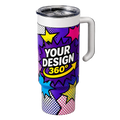












The case for physical branded products in a world saturated with digital advertising
Digital advertising has never been more technically sophisticated or more widely ignored. The average person is exposed to somewhere between 4,000 and 10,000 brand messages per day across screens, apps, and platforms. The human brain's response to that volume is not engagement — it is filtering. Banner blindness, ad blocking, and the habituated scroll that carries people past sponsored content without registering it are not bugs in digital advertising. They are features of a brain protecting itself from sensory overload.
Into this environment, a physical promotional product arrives differently. It is not competing for attention in a feed. It is sitting on a desk, in a hand, on a refrigerator. It does not disappear when a session ends or get blocked by software. It occupies physical space in the recipient's daily environment and generates brand impressions continuously, for years, at zero additional cost after the initial investment.
This is not an argument against digital advertising. Digital advertising serves specific functions — driving awareness, retargeting, converting intent — that physical products cannot replicate. The argument is that for relationship depth, sustained visibility, and the kind of brand presence that influences behavior over time, promotional products do something digital advertising structurally cannot. Understanding what that is and when it matters is what this guide covers.
The attention problem digital advertising has not solved
The fundamental challenge of digital advertising is that it is interruptive by nature. It appears in spaces where people are trying to do something else — read content, watch a video, scroll a feed — and asks them to redirect their attention to a brand message they did not request. The entire history of digital advertising optimization is the history of finding increasingly clever ways to interrupt people while minimizing how annoyed they become about being interrupted.
Promotional products operate on an entirely different attention model. Nobody picks up their branded tumbler because they were interrupted. They pick it up because they want a drink. The brand impression happens incidentally, in a moment of voluntary positive action, with no competing messages and no irritation. That is a fundamentally different psychological context for brand exposure — and the difference in how the brain processes those impressions is significant.
An ad impression happens to someone. A promotional product impression happens with someone. The difference in receptivity between those two states is not small. Advertising research consistently shows that brand messages received in positive emotional states are processed more deeply and retained longer than messages received during interruption.
Why people keep promotional products but ignore ads
The average digital display ad has a recall rate of around 1 to 2 percent. The average quality promotional product has a retention rate of over 80 percent after twelve months. Those numbers represent a fundamental difference in how the two media work — not a difference in creative quality or targeting sophistication, but a difference in the nature of the medium itself.
People keep promotional products that are useful. A tumbler that keeps their coffee hot gets kept. A magnet with a contractor's number goes on the fridge where it stays for years. A branded shirt that fits well and looks good gets worn regularly. In each case the brand persists in the recipient's environment not because of any additional marketing spend but because the product earned its place there through genuine utility.
Digital ads earn nothing. They appear, they are processed or ignored, and they disappear. The next impression requires another spend. There is no compounding — every impression costs the same whether it is the first or the thousandth. Promotional products compound. The first impression is the product gift. Every subsequent impression is free.
The cost-per-impression math that makes promotional products compelling
Marketing budgets are ultimately about cost efficiency — how many quality impressions can be generated per dollar spent. The promotional product calculation looks very different from digital advertising when the full lifespan of the product is accounted for.
| Medium | Cost per unit / impression | Impressions generated | Lifespan | Cost per impression |
|---|---|---|---|---|
| Custom tumbler | $25–40 per unit | 2,000–4,000+ (daily use, 2–3 years) | 3–5 years | Under $0.02 |
| Magnetic business card | $1–3 per unit | Hundreds (years of daily visibility) | 3–5+ years | Under $0.01 |
| Google display ads | $0.50–$3 CPM | 1,000 per $0.50–$3 spend | Seconds | $0.001–$0.003 but near-zero retention |
| Facebook/Instagram ads | $5–$15 CPM | 1,000 per $5–$15 spend | Seconds | $0.005–$0.015 but near-zero retention |
| Branded t-shirt | $15–25 per unit | 300–600 (10–20 wears in public) | 1–2 years | Under $0.05 |
The raw CPM numbers for digital advertising appear lower than promotional products until lifespan and retention are factored in. A display ad impression lasts seconds and generates near-zero brand recall. A tumbler impression lasts the duration of every use, occurs in a positive personal context, and the brand is present in the recipient's life every single day for years. These are not equivalent impressions — and cost-per-impression comparisons that treat them as equivalent miss what actually drives brand equity over time.
The trust dimension that advertising cannot manufacture
There is a dimension of promotional product effectiveness that does not show up in impression metrics but profoundly affects how they work: the trust signal embedded in a gift.
When a business gives a client or customer a quality promotional product, the act of giving communicates something about the relationship. It says the business values the recipient enough to invest in a physical object for them. That investment — even at $25 to $40 per unit — communicates care in a way that a targeted Facebook ad delivered to the same person never could, because the recipient knows the ad was delivered by an algorithm to thousands of people simultaneously, not chosen specifically for them.
The psychological literature on gift-giving is consistent on this point: physical gifts create social bonds and generate reciprocity in ways that service transactions and digital communication do not. A client who received a quality branded tumbler from a business associate thinks differently about that business than a client who received only emails and retargeted ads. The physical gift created a different kind of relationship.
Advertising tells people you exist. A promotional product tells people you thought of them. Only one of those statements creates a relationship.
Where promotional products specifically outperform digital advertising
Promotional products do not outperform digital advertising in every context. Understanding the specific situations where physical products have a structural advantage helps businesses allocate their marketing spend more intelligently.
Reaching people in their personal environment
Digital advertising reaches people on their devices. A promotional product reaches them in their home, in their car, and in their personal daily routines — environments where they are not in a commercial mindset and where brand associations form more naturally and persist longer. A branded tumbler on a home desk reaches the person in a context that no retargeting campaign can access.
Maintaining top-of-mind awareness between purchase occasions
For businesses where the purchase cycle is long — contractors, real estate agents, insurance brokers, professional service firms — the marketing challenge is staying top-of-mind during the months or years between when a client last needed you and when they next will. A promotional product in daily use solves this problem passively. A digital advertising campaign targeting the same period requires continuous spend with diminishing returns as the audience becomes desensitized to seeing the same brand repeatedly.
Generating referral conversations
A branded tumbler on a desk or a vehicle magnet on a company truck generates the question "where did you get that?" or "who does your signs?" in a way that a digital ad never will. Physical branded products in public environments create organic word-of-mouth opportunities that are structurally impossible to generate through digital channels. Every referral conversation that starts with a physical branded product has a lower customer acquisition cost than almost any digital channel.
Deepening existing customer relationships
Digital advertising is primarily an acquisition tool — it is optimized for reaching people who do not yet have a relationship with the brand. Promotional products are better suited to deepening relationships that already exist. A client appreciation gift communicates something to an existing client that no retargeting ad can replicate. The investment in a physical product signals relationship value in a way that digital communication — however personalized — cannot fully substitute for.
Building brand presence in physical spaces
Digital advertising has no presence in the physical world. A branded sign, a branded tumbler on a conference table, a branded shirt at an industry event — these create physical brand presence in spaces where digital advertising simply does not exist. For businesses that operate in or sell to physical environments, promotional products are the only form of marketing that reaches people where they actually spend most of their time.
How promotional products and digital advertising work best together
The strongest marketing programs do not choose between promotional products and digital advertising — they use each medium for what it does best and combine them deliberately.
- Use digital advertising for awareness and acquisition — reaching new audiences, driving traffic, retargeting known visitors, and converting intent-based searches. This is where digital is structurally superior.
- Use promotional products for relationship depth and retention — gifting at key relationship moments, maintaining top-of-mind awareness between transactions, and generating the physical brand presence that digital advertising cannot create.
- Use promotional products to generate social content — a well-designed branded tumbler or product in a customer's hands creates social media content that functions as user-generated advertising. The physical product and digital visibility reinforce each other.
- Use digital advertising to support promotional product campaigns — promoting a giveaway, announcing a new merchandise drop, or retargeting event attendees after gifting them a product at the event. The combination drives more action than either channel alone.
Frequently asked questions
For specific use cases — client retention, referral generation, long sales cycle top-of-mind awareness, and relationship gifting — promotional products consistently deliver better ROI than digital advertising. A $30 tumbler that keeps a client relationship warm for three years and generates two referrals has a return that would be difficult to match with an equivalent digital ad spend targeting the same person. For broad awareness and new customer acquisition, digital advertising is typically more cost-efficient. The comparison is most useful when you define the objective clearly — the two media are not always competing for the same outcome.
Digital ads are interruptive — they appear when people are trying to do something else and require active filtering to ignore. Promotional products are useful — they are kept and used because they serve a genuine function in the recipient's daily life. The attention a promotional product receives is voluntary and positive rather than forced and resented. That difference in the psychological context of the impression changes how the brand message is processed and retained.
Businesses with long purchase cycles and high customer lifetime value benefit most — real estate, professional services, contractors, insurance, financial advisors. Businesses where referrals drive significant growth also benefit disproportionately because promotional products create the physical touchpoints that generate referral conversations. Businesses with existing customer bases they want to retain and deepen relationships with benefit more from promotional products than from new customer acquisition advertising.
Yes — particularly when the budget forces prioritization. A small business with $500 in marketing budget can send quality branded tumblers to its 15 best clients and generate years of ongoing brand visibility and relationship reinforcement. The same $500 in digital advertising might generate a few hundred clicks that convert at 1 to 2 percent. For small businesses where each customer relationship is high-value and referrals matter, the promotional product allocation often outperforms the digital spend significantly on a per-relationship basis.
Brand loyalty is built through repeated positive experiences with a brand — not through repeated exposure to brand messaging. A promotional product that performs well every day creates repeated positive brand associations through use. An ad creates repeated exposure to messaging, which research shows produces diminishing emotional returns and eventually negative responses through ad fatigue. The product earns its place in the recipient's life. The ad is tolerated until it is blocked or ignored.
No — they serve different functions and work best in combination. Digital advertising excels at reaching new audiences, driving traffic, and converting people who are actively searching for your product or service. Promotional products excel at deepening existing relationships, generating referrals, and building the kind of persistent brand presence that digital advertising cannot create in physical environments. The most effective marketing programs allocate budget to both based on the specific objectives they are trying to achieve.


