


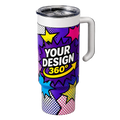







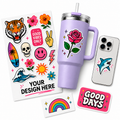


What Is a Custom Drinkware Business?
A custom drinkware business decorates blank tumblers, mugs, bottles, and cups with personalized artwork, logos, names, or designs and sells them to consumers, businesses, and event organizers. It is one of the most accessible product-based businesses available in 2026 — startup costs are low, demand is consistent, and the decoration technology required to produce professional results has become affordable and beginner-friendly.
Custom drinkware sells into several overlapping markets simultaneously: weddings and events, corporate gifting, personalized consumer products, sports teams, school fundraisers, and small business branded merchandise. That cross-market demand is what makes it a resilient business category — a slow wedding season doesn't tank revenue if your corporate gifting and retail channels are active.
The two decoration methods that dominate the custom drinkware market today are sublimation printing and UV DTF transfers. Understanding both — what they produce, what they cost, and which substrates they work on — is the foundation of building a competent drinkware operation.
Custom drinkware is one of the few product categories where a single item retails for $25–$45 and costs $8–$15 to produce and decorate. That margin profile, combined with low shipping weight and strong gifting demand, makes it one of the better product niches for a home-based or small-studio business.
Choose Your Business Model
How you structure your drinkware business determines your startup costs, production capacity, and growth ceiling. There are three realistic models — each suits a different situation.
Decoration-Only (Custom Orders)
You purchase blank drinkware wholesale and decorate it to order using UV DTF transfers, sublimation, or both. Every item is made to a customer's specification — name, design, color, occasion. This is the most common starting model because it requires no inventory of finished goods, generates cash before production costs, and builds a customer base through personalization. Revenue is order-driven and relationship-based. A single wedding order for 50 tumblers or a corporate gifting account placing quarterly orders can anchor your monthly revenue.
Retail / Branded Product Line
You design a line of decorated drinkware under your own brand and sell it through an online store, Etsy, or in-person markets. Products are either made to order from existing designs or held as finished inventory. This model requires more upfront design investment and carries inventory risk, but it builds brand equity and enables passive sales from a catalog of designs — rather than requiring active custom quoting for every order. Niche-specific design lines (occupation themes, local pride, hobby communities) perform best in this model.
Hybrid Model
Custom orders fund operations and cash flow while a retail design catalog generates passive revenue alongside them. Most successful drinkware businesses land here within 12–18 months of starting. Custom orders keep the press running and revenue predictable; the retail catalog builds brand recognition and reduces dependence on any single client or order type. The hybrid model also allows you to develop designs through custom orders — a popular custom request often becomes a strong catalog product.
Decoration Methods for Custom Drinkware
Decoration method is the most important technical decision in a drinkware business. Each method has a different equipment investment, substrate requirement, design capability, and production workflow. Get this decision right before buying anything.
| Method | Equipment Cost | Full Color | Works On | Min. Order | Durability |
|---|---|---|---|---|---|
| UV DTF Transfers | Low — no equipment needed | Yes | Any smooth hard surface | 1 unit | 1–3 years hand wash |
| Sublimation | Medium — $500–$2,000 | Yes | White/light coated poly only | 1 unit | Very long-lasting |
| Laser Engraving | High — $3,000–$10,000+ | No — single tone | Metal, wood, glass, acrylic | 1 unit | Permanent |
| UV Printing (direct) | Very high — $15,000+ | Yes | Most hard surfaces | 1 unit | Very long-lasting |
| Vinyl Decals | Low — cutter only | Limited | Smooth surfaces | 1 unit | Moderate — edges lift on curves |
| Epoxy Coating | Low — resin and molds | Yes | Most tumblers | 1 unit | Long-lasting when cured properly |
For a new drinkware business in 2026, starting with UV DTF transfers requires zero equipment investment beyond the transfers themselves — no printer, no heat press, no sublimation oven. You order transfers printed to your design, apply them by hand, and sell the finished product. Add sublimation once you have consistent volume and want to expand your substrate range.
UV DTF Transfers: The Lowest-Barrier Entry Point
UV DTF transfers have fundamentally changed the economics of starting a custom drinkware business. Before UV DTF, producing professional full-color graphics on a curved tumbler required either a sublimation setup (limited to white coated poly blanks) or a direct UV printer (capital-intensive). UV DTF eliminated both constraints.
How It Works for Drinkware
UV DTF transfers are printed with UV-cured inks on a clear PET carrier film. You apply the transfer to the tumbler surface by pressing firmly and peeling the carrier film back, leaving only the cured ink layer bonded to the substrate. No heat, no equipment, no special setup. The finished result is a smooth, film-free graphic flush against the tumbler surface — indistinguishable from direct UV printing to most customers.
What It Works On
UV DTF adheres to any smooth, non-porous hard surface — powder-coated stainless steel tumblers, glass, acrylic, ceramic, aluminum, and coated plastics. It does not require a special coating on the blank, which means you can decorate virtually any tumbler from any supplier rather than being limited to sublimation-coated white blanks. This flexibility is a significant competitive and operational advantage.
Ordering Transfers vs. Printing In-House
You can order UV DTF transfers from a supplier like Tawgraphix with no minimums, receive them ready to apply, and start selling without any equipment investment. As your volume grows, bringing UV DTF printing in-house becomes cost-effective — commercial UV DTF printers start around $8,000–$15,000 and bring per-transfer costs down significantly at high volumes. Start outsourced, scale to in-house when the numbers justify it. Use the UV DTF gang sheet builder to order custom transfers with your designs at the lowest per-unit cost.
Sublimation Printing: When to Add It
Sublimation is the other major decoration method for drinkware and produces a different result than UV DTF. Understanding both methods — and when each is the right tool — is what separates a capable drinkware operator from one who is limited by their equipment.
How Sublimation Works on Drinkware
Sublimation uses heat and pressure to convert solid dye into gas that permanently bonds with the polyester coating on the blank. The result is a decoration that is part of the surface itself — it cannot peel, crack, or lift because it's embedded in the coating rather than sitting on top of it. Sublimation requires a sublimation printer, sublimation ink, a mug press or tumbler oven (for curved items), and sublimation-coated blanks.
Sublimation Limitations
Sublimation only works on white or very light-colored blanks with a polyester coating. It will not produce vibrant colors on dark substrates and will not work at all on uncoated metal, glass, or non-polyester surfaces without a special coating. This substrate limitation is why many drinkware businesses use sublimation alongside UV DTF rather than exclusively — sublimation for white coated mugs and tumblers where permanence is the priority, UV DTF for colored powder-coated tumblers and specialty substrates.
When to Add Sublimation to Your Operation
Add sublimation when you have consistent demand for white coated mugs or photo-quality wrap-around tumbler designs, and when the volume justifies the equipment investment ($500–$2,000 for a complete entry-level sublimation setup). Sublimation produces the most durable and seamless wrap-around decoration available for compatible blanks — for businesses selling personalized photo mugs or full-wrap tumblers, the quality difference over UV DTF is worth the equipment cost.
Sourcing Blank Drinkware
The blank is half of your finished product. Quality, finish compatibility, and cost all vary significantly between suppliers. Choosing the wrong blank wastes decoration cost and damages your reputation when products fail in customers' hands.
- For UV DTF: Source powder-coated stainless steel tumblers with a smooth finish — avoid soft-touch, rubberized, or heavily textured coatings that resist adhesion
- For sublimation: Blanks must be labeled as sublimation-ready or sublimation-coated — do not assume a white tumbler is sublimation-compatible without confirming
- Wholesale distributors: S&S Activewear, Vapor Apparel, and Blank Brand carry sublimation-ready drinkware; BulkFlask, TumblerBulk, and similar distributors supply powder-coated tumblers at volume pricing
- Always test new blanks: Apply a test decoration and check adhesion before ordering large quantities — blank quality and coating consistency vary between suppliers and even between production runs
- Popular sizes and styles: 20oz and 30oz insulated tumblers are the most in-demand formats; 12oz stemless wine tumblers, 16oz pint tumblers, and 11oz ceramic mugs round out a versatile product lineup
- Get a resale certificate: A state resale certificate allows you to purchase blanks wholesale without paying sales tax — most major distributors require it to open an account
Setting Up Your Production Workspace
A custom drinkware business can operate from a spare room, garage, or small studio. Your workspace needs are modest compared to most product-based businesses, but organization and workflow efficiency directly affect how many units you can produce per hour — which directly affects your effective hourly earnings.
Production Station
Dedicate a clean, well-lit work surface for decoration. Keep isopropyl alcohol, lint-free cloths, scissors, and your transfer inventory organized and within reach. For UV DTF work, a non-slip mat on your work surface prevents tumblers from rolling during application. Good overhead lighting lets you see adhesion quality and spot air bubbles before peeling the carrier film.
Blank Storage
Store blank tumblers upright in their original packaging or in organized bins by style and color. Blanks stored in dusty or humid environments develop surface contamination that affects decoration adhesion. Keep your blank storage area clean and dry, and wipe every blank with isopropyl alcohol immediately before decoration regardless of storage conditions.
Order Management System
Even at low volumes, track every order with a system — a spreadsheet, Airtable, or a simple order management app. Record the customer name, design specs, tumbler color and size, personalization details, payment status, and due date. Custom orders for events have hard deadlines. Losing track of an order or shipping a misspelled name is a customer service failure that damages your reputation and costs you money in reprints.
Packaging Station
Set up a dedicated packing area with your mailers, tissue paper, thank-you cards, care instruction cards, and tape. Packing an order should take under 3 minutes when everything is organized. Branded packaging — a logo-printed mailer, tissue, and a simple care card — costs under $1.50 per order and dramatically improves the customer experience, driving reviews and repeat purchases.
Pricing Your Custom Drinkware
Drinkware pricing must account for the blank cost, decoration cost, packaging, labor, platform fees, and shipping — not just the blank. Operators who price based only on "blank cost plus a little" consistently underprice and undermine the sustainability of their business.
| Cost Component | UV DTF Tumbler Example | Notes |
|---|---|---|
| Blank tumbler (20oz powder-coated) | $6.00–$10.00 | Wholesale pricing; varies by brand and quantity |
| UV DTF transfer | $2.00–$4.00 | Gang sheet pricing reduces this at volume |
| Labor (cleaning, applying, QC) | $2.00–$4.00 | Value your time at a real hourly rate |
| Packaging (mailer, tissue, card) | $1.00–$2.00 | Branded packaging costs slightly more but pays back in reviews |
| Shipping | $5.00–$8.00 | Tumblers ship heavier than apparel — factor this in |
| Platform / transaction fees | $1.50–$3.00 | Etsy, Shopify, PayPal cuts on every sale |
| Total landed cost | $17.50–$31.00 | Before any profit margin |
| Recommended retail price | $35.00–$55.00 | 2–2.5x landed cost for sustainable margins |
Custom personalization — adding a name, date, or individual message — justifies a price premium of $5–$10 above your standard decorated product. Customers expect to pay more for something made specifically for them. Do not give personalization away for free; it costs you design time and eliminates the ability to batch-produce.
Where to Sell Custom Drinkware
The most successful custom drinkware businesses sell through multiple channels simultaneously. Each channel reaches a different buyer, has different economics, and requires different effort to maintain.
Etsy
Etsy is the single highest-traffic marketplace for personalized drinkware. Buyers search Etsy specifically for custom tumblers, personalized mugs, and bridesmaid gifts — intent is high and the audience is already looking for what you make. Competition is significant, so your listing photography, SEO, and review count matter enormously. Etsy takes 6.5% transaction fees plus payment processing, but the built-in traffic makes it worth maintaining as a primary channel, especially early on when you don't have organic traffic to your own store.
Your Own Online Store
A Shopify store gives you full control of your brand, customer data, and margins. There are no marketplace transaction fees eating into every sale, and you can build an email list, run your own promotions, and create a brand experience that Etsy's uniform template doesn't allow. The tradeoff is that you must drive your own traffic through SEO, social media, and paid advertising. Build your store from day one and grow it alongside your Etsy presence — it becomes your most valuable long-term asset.
Local Markets and Vendor Events
Farmers markets, craft fairs, bridal expos, and pop-up vendor markets provide immediate cash sales and direct customer interaction. In-person selling generates word-of-mouth referrals that are nearly impossible to replicate online, especially for event-related products like wedding favors and bachelorette party sets. A single conversation at a bridal expo can turn into a 50-tumbler wedding order and three referrals to other brides in the same friend group.
B2B and Corporate Accounts
Businesses, restaurants, gyms, real estate agencies, and event companies regularly need branded drinkware for clients, employees, and promotional purposes. A single B2B account placing two or three orders per year can represent thousands of dollars in predictable revenue. B2B buyers care more about reliability and turnaround than price — if you can consistently deliver quality on time, corporate accounts will stay with you without shopping around the way individual consumers do.
Social Media Direct Sales
Instagram and TikTok are particularly effective for custom drinkware because the product is highly visual and the production process — applying a transfer, revealing the finished design — makes compelling short-form video content. A single viral video showing a satisfying tumbler reveal can generate hundreds of inquiries. Post consistently, show your process, tag your niche, and make it easy for viewers to find your store link in your bio.
Most Profitable Custom Drinkware Products
Not all drinkware products are equally profitable. These product types consistently deliver the best margin-to-effort ratio for a small custom drinkware operation.
- Wedding and event tumbler sets (10–50 units): High order value, referral-driven, recurring during wedding season — one bride refers three more
- Bachelorette party sets: Groups of 8–15, matching design plus individual names, strong social media sharing that generates organic exposure
- Corporate branded tumblers: Logo plus company name, repeat orders, B2B pricing allows for better margins than consumer market
- Personalized name tumblers for gifting: Birthday and holiday gift demand is year-round; one strong listing on Etsy can generate passive daily sales
- Occupation and niche-themed tumblers: Nurse, teacher, firefighter, dog mom — designs with strong identity appeal that sell repeatedly with no customization required
- Seasonal and holiday designs: Christmas, Valentine's Day, Mother's Day — high search volume, short selling windows, batch production friendly
Business Setup: What You Need Before You Launch
Register Your Business
Form an LLC in your state to separate personal and business liability. An LLC costs $50–$500 depending on the state and provides meaningful protection once you're generating real revenue and shipping physical products to customers. Get an EIN from the IRS (free, takes 5 minutes online) and open a dedicated business checking account. Never run business transactions through personal accounts — it complicates taxes and voids the liability protection an LLC provides.
Get a Resale Certificate
A state resale certificate (seller's permit) lets you purchase blank drinkware wholesale without paying sales tax at the point of purchase — because you'll collect and remit sales tax when you sell to the end customer. Most wholesale distributors require this before opening an account. Obtain it through your state's department of revenue before placing your first wholesale order.
Understand Sales Tax Obligations
You are required to collect sales tax from customers in states where you have nexus — typically your home state at minimum, and potentially other states if your sales volume crosses economic nexus thresholds. Shopify and Etsy have built-in sales tax calculation tools, but you are responsible for remitting what is collected to the appropriate state revenue agency. Consult a tax professional familiar with e-commerce if you're selling across multiple states at meaningful volume.
Intellectual Property: What You Can and Cannot Use
Do not use trademarked characters, logos, sports team marks, or copyrighted artwork on products you sell without a license — even if you see others doing it. IP enforcement in the custom drinkware space is active, and a cease-and-desist or takedown notice can disrupt your business and result in financial liability. Build your product line on original artwork, properly licensed designs, or designs created specifically for you. Your own original designs are your most defensible long-term asset.
How to Scale Your Drinkware Business
Scaling a drinkware business follows a predictable path when done correctly. The key is scaling in response to demonstrated demand — not in anticipation of it.
- Phase 1 — Validate: Start with UV DTF outsourced transfers, sell through Etsy and local markets, find your best-performing products and niches before investing in equipment
- Phase 2 — Optimize: Build a Shopify store, establish wholesale blank accounts, standardize your production workflow, and add sublimation if white coated mugs are a consistent revenue stream
- Phase 3 — Expand: Add in-house UV DTF printing when outsourced transfer volume justifies the equipment cost, pursue B2B accounts actively, expand into adjacent product categories like custom drinkware bundles and branded merchandise sets
- Phase 4 — Systematize: Document every process, hire part-time help for production and packing, build recurring revenue through subscription gifting programs or standing B2B accounts, and reduce your personal time-per-order to increase effective capacity
Frequently Asked Questions
You can start a UV DTF-based custom drinkware business for $300–$600. That covers your first batch of blank tumblers ($100–$200 wholesale), an initial order of UV DTF transfers ($50–$150), basic packaging supplies ($30–$50), and an Etsy or Shopify account. No equipment purchase is required to start — UV DTF transfers are applied by hand. Adding sublimation capability later requires $500–$2,000 for a printer, ink, and mug press. In-house UV DTF printing starts at $8,000–$15,000 and is only justified once outsourced transfer volume makes the math work.
Yes, custom drinkware is one of the more profitable small product businesses available. A single decorated 20oz tumbler sold for $35–$45 has a landed cost of $17–$25, producing gross margins of 40–55%. At scale with in-house decoration, margins improve further. The business is most profitable when you have a mix of bulk event orders (high volume, efficient production) and premium personalized orders (high per-unit margin). B2B accounts that place recurring orders generate the most predictable and lowest-effort revenue.
If you start with UV DTF transfers, you need no equipment at all beyond a clean workspace and isopropyl alcohol for surface prep. UV DTF transfers are applied entirely by hand. If you add sublimation, you need a sublimation printer ($200–$500), sublimation ink, sublimation paper, and a mug press or tumbler oven ($150–$400). Laser engraving requires a laser engraver ($3,000–$10,000+). Start with UV DTF to validate demand and generate revenue before committing to equipment purchases.
For a new business in 2026, UV DTF transfers are the best starting decoration method for tumblers. They require no equipment, work on any powder-coated or smooth-finish tumbler regardless of color, support full-color complex artwork, and have no minimum order requirement. Sublimation produces more durable and seamless results on white coated blanks and is worth adding once you have consistent volume for that product type. For a premium minimalist aesthetic, laser engraving on metal tumblers commands a higher price point but requires significant equipment investment.
Major wholesale distributors for blank drinkware include S&S Activewear, Vapor Apparel, BulkFlask, TumblerBulk, and Alibaba for larger volume orders. Most require a resale certificate or business license to open a wholesale account. For sublimation-ready blanks specifically, look for items explicitly labeled as sublimation-coated — not all white tumblers are compatible. Always order a small test quantity from any new supplier before committing to large inventory purchases, and decorate a test piece to confirm adhesion quality before stocking up.
Add up all your costs — blank, decoration, labor, packaging, platform fees, and shipping — and multiply by 2 to 2.5 for your retail price. A decorated 20oz tumbler with a total landed cost of $20 should retail for $40–$50. Do not price based on what you see competitors charging without knowing their cost structure — many small sellers are underpriced and operating at a loss. Charge a personalization premium of $5–$10 for individual name additions, and charge rush fees for orders needed within 48–72 hours. Your pricing needs to sustain the business, not just cover materials.
Yes — a UV DTF-based drinkware operation requires nothing more than a clean tabletop workspace and storage for blanks and supplies. A sublimation setup adds a printer and mug press, both of which fit easily on a standard work table. Most custom drinkware businesses operate successfully from home up to several hundred units per month. Check your local zoning, HOA rules if applicable, and home insurance policy before scaling to the point where you have regular deliveries, employees, or a large inventory on-site.
The 20oz insulated stainless steel tumbler is the single best-selling format for most custom drinkware businesses — it is the right size for everyday use, fits in a car cupholder, ships cost-effectively, and the price point works for both gifting and event favors. The 30oz tumbler is popular for outdoor, gym, and heavy-use buyers. Stemless wine tumblers (12oz) are strong sellers for bachelorette, bridal, and women's gifting markets. Ceramic mugs sell consistently for personalized gifting and corporate branded products. Start with 20oz and 12oz wine tumblers to cover the broadest share of demand with the least inventory complexity.


