











If you've been researching custom apparel printing, you've almost certainly come across the term DTF transfers. In just a few years, DTF printing has gone from a niche technology to one of the most widely used methods in the custom apparel industry — and for good reason. DTF transfers offer a combination of print quality, design flexibility, and low cost of entry that no other printing method can match for small businesses and growing brands. Whether you're a clothing brand owner, an Etsy seller, a print shop operator, or simply someone curious about how custom t-shirts are made, this guide covers everything you need to know about DTF transfers — what they are, how they work, who uses them, and why so many businesses are switching to DTF as their primary printing method.
What Does DTF Stand For?
DTF stands for Direct-to-Film. The name describes exactly how the printing process works — designs are printed directly onto a special transfer film, which is then used to apply the design to fabric. The film acts as an intermediary carrier that holds the ink and adhesive until it is transferred to the garment using a heat press.
DTF is a relatively recent innovation in the printing industry. While screen printing has been the dominant apparel decorating method for decades and direct-to-garment (DTG) printing emerged in the early 2000s, DTF printing became commercially viable for small businesses in the late 2010s and has grown rapidly in adoption ever since. Today it is one of the most popular printing methods for custom apparel businesses of all sizes.
How Do DTF Transfers Work?
Understanding how DTF transfers are made helps you appreciate what makes them different from other printing methods and why they produce such consistent, high-quality results.
Step 1: Printing the Design onto Film
The DTF process begins with a specially designed printer that uses water-based pigment inks to print a design onto a clear PET transfer film. The printer lays down the design in reverse — mirrored so that it reads correctly when applied to the garment. Unlike standard inkjet printing, DTF printers use a white ink channel in addition to the standard CMYK color channels. The white ink is printed as an underbase layer beneath the color inks, which is what allows DTF transfers to print vibrantly on dark-colored fabrics.
Step 2: Applying Adhesive Powder
While the ink is still wet on the film, a hot-melt adhesive powder is applied evenly across the printed surface. This powder adheres to the wet ink and will later melt under heat to bond the design to the fabric fibers. The powder is applied either manually by shaking it over the film or automatically through a powder shaker machine in higher-volume production setups.
Step 3: Curing the Transfer
The film with adhesive powder is passed through a curing oven or held under a heat source to melt and fuse the adhesive powder into the ink layer. This creates a unified, flexible transfer that holds its shape and can be handled, stored, and shipped without damage. After curing, the DTF transfer is ready to be applied to a garment.
Step 4: Heat Press Application
The cured DTF transfer is placed ink-side down onto the garment and pressed with a heat press at approximately 320–330°F (160–165°C) for 10–15 seconds with medium-to-firm pressure. The heat melts the adhesive layer and bonds the ink to the fabric fibers. After pressing, the transfer film is peeled away — either hot or cold depending on the specific transfer type — leaving the design permanently adhered to the garment.
What Makes DTF Transfers Different From Other Printing Methods?
DTF transfers have a distinct set of characteristics that set them apart from other popular apparel printing methods. Here is how DTF compares to the most common alternatives.
| Method | How It Works | Color Limit | Min. Order | Equipment Needed | Works on Dark Fabric |
|---|---|---|---|---|---|
| DTF Transfers | Print on film, press onto fabric | Unlimited | None | Heat press only | Yes |
| Screen Printing | Push ink through screens onto fabric | Limited spot colors | 24–48 pieces | Screen printing press | Yes (with underbase) |
| DTG Printing | Print directly onto garment | Unlimited | None | DTG printer ($15,000+) | Yes (with pretreat) |
| Heat Transfer Vinyl | Cut colored vinyl, press onto fabric | Limited, no gradients | None | Vinyl cutter, heat press | Yes |
| Sublimation | Dye infused into fabric under heat | Unlimited | None | Sublimation printer, heat press | No (light fabric only) |
DTF transfers stand out for combining unlimited color printing with no minimum order requirements and the need for only a heat press on the application side. No other method offers all three of those advantages simultaneously.
What Are the Benefits of DTF Transfers?
The rapid growth of DTF printing in the custom apparel industry is driven by a specific set of benefits that make it exceptionally well-suited for small businesses, growing brands, and print shops.
No Setup Fees
Unlike screen printing, which requires a screen to be burned for every color in a design, DTF printing is fully digital. There are no screens, no plates, and no setup fees. You pay for the transfer itself — nothing more. This makes DTF economically viable for orders of any size, from a single custom shirt to thousands of units.
Unlimited Full-Color Printing
DTF transfers reproduce any design in full color — including gradients, photographic images, fine details, and complex illustrations — at the same cost as a simple one-color logo. This gives brands complete creative freedom without the color restrictions and cost escalation that come with screen printing.
Works on Almost Any Fabric
DTF transfers adhere to cotton, polyester, cotton-polyester blends, nylon, denim, canvas, leather, and most other fabrics. Unlike sublimation, which only works on high-polyester fabrics, DTF works equally well on 100% cotton garments — the most popular material in the custom apparel market.
Vibrant Results on Dark Fabrics
The white ink underbase in DTF printing allows designs to appear bright and accurate on dark-colored garments. Black, navy, forest green, burgundy, and other deep colors all produce excellent DTF results without any additional cost or process steps compared to printing on light fabrics.
No Minimum Order Quantities
DTF transfers can be ordered in any quantity — one piece, ten pieces, or ten thousand pieces. There is no minimum order per design, which makes DTF ideal for businesses that offer personalized or one-of-a-kind items, brands testing new designs before committing to large production runs, and print shops managing a diverse client base with varied order sizes.
Low Equipment Investment for Application
If you order ready-to-press DTF transfers from a supplier like Tawgraphix, the only equipment you need to apply them is a heat press. Entry-level heat presses start at around $200–$400 — a fraction of the cost of a DTG printer ($15,000+) or a screen printing setup. This low barrier to entry makes DTF-based apparel production accessible to entrepreneurs and small businesses at any stage.
Fast Turnaround
Because DTF printing is a digital process with no screen setup or film burning required, orders can move from file submission to production quickly. For time-sensitive orders, event merchandise, and on-demand fulfillment, DTF's fast production timeline is a significant operational advantage.
What Products Can You Make With DTF Transfers?
DTF transfers work on virtually any fabric-based product that can be placed flat under a heat press. The most common products decorated with DTF transfers include the following.
- T-shirts — the most popular DTF application, available in any color and fabric blend
- Hoodies and sweatshirts — DTF works on heavyweight fleece fabrics without quality loss
- Hats and caps — structured and unstructured caps both accept DTF transfers on front panels and side areas
- Tote bags — canvas and fabric tote bags are excellent DTF substrates
- Baby onesies and kids apparel — DTF transfers are safe for children's clothing when fully cured
- Joggers and athletic wear — polyester and performance fabrics work well with DTF
- Denim jackets and jeans — DTF adheres to denim with strong, wash-resistant results
- Aprons and workwear — canvas and heavy-duty fabric workwear accepts DTF transfers effectively
Who Uses DTF Transfers?
DTF transfers are used across a wide range of industries and business types. Understanding who uses them helps illustrate the breadth of applications DTF printing supports.
Clothing Brands
Independent clothing brands use DTF transfers to produce their seasonal collections, limited-edition drops, and core product lines. DTF's full-color capability and no-minimum ordering make it ideal for brands at every stage — from a first-time entrepreneur producing 10 shirts to an established brand running seasonal production orders.
Etsy Sellers
Custom apparel is one of the top-selling categories on Etsy, and DTF transfers power a large portion of that market. Etsy sellers use DTF gang sheets to produce a wide variety of designs cost-efficiently, offer personalized and custom-name apparel, and fulfill orders quickly without the overhead of in-house printing equipment. Etsy sellers regularly order DTF gang sheets from Tawgraphix to keep their cost of goods low while maintaining professional print quality.
Print Shops
Print shops that offer custom apparel services use DTF transfers to serve clients who need small runs, full-color designs, or fast turnaround — jobs that screen printing handles poorly. Many print shops outsource their DTF production to a specialist supplier like Tawgraphix rather than investing in their own DTF printing equipment, keeping overhead low while expanding their service offering.
Event Organizers
Custom t-shirts, hoodies, and merchandise for corporate events, charity fundraisers, sports tournaments, and concerts are frequently produced using DTF transfers. DTF's design flexibility and no-minimum ordering make it practical for events that need a mix of staff uniforms, attendee merchandise, and sponsor-branded items in a single production run.
Promotional Product Companies
Companies that produce branded merchandise for corporate clients, marketing campaigns, and trade shows use DTF transfers to decorate apparel and fabric goods with client logos and artwork. DTF's fast turnaround and digital workflow fit the deadline-driven nature of promotional products work.
What Is a DTF Gang Sheet?
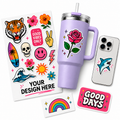
A DTF gang sheet is a single large print that contains multiple designs arranged together and printed as one job. Rather than ordering each design individually — which increases cost — a gang sheet maximizes the printable area of a sheet by packing many designs side by side.
Gang sheets are priced by the sheet, not by the number of designs. This means the more efficiently you pack your sheet, the lower your cost per transfer. For businesses with multiple designs, seasonal collections, or personalized items, gang sheet ordering is the most cost-efficient way to produce DTF transfers.
Clothing brands, Etsy sellers, and print shops order DTF gang sheets from Tawgraphix to produce entire collections or diverse product catalogs in a single, cost-efficient print run — paying for one sheet and receiving dozens of individual ready-to-press transfers.
How to Order DTF Transfers From Tawgraphix
Ordering DTF transfers from Tawgraphix is designed to be straightforward for businesses of all sizes, from first-time apparel entrepreneurs to established print shops.
Prepare Your Artwork
Create your design as a high-resolution PNG file with a transparent background at 300 DPI or higher. Work in RGB color mode for the most accurate color reproduction. If you are building a gang sheet, arrange your designs on a canvas sized to your desired sheet dimensions with at least 0.25 inches of space between each design.
Submit Your File
Upload your print-ready file at Tawgraphix.com. Tawgraphix reviews all files for print-readiness before production begins and will reach out if any adjustments are needed.
Professional Production
Tawgraphix prints your DTF transfers on professional-grade printing equipment using high-quality water-based pigment inks for vibrant, wash-resistant results. Every order is produced to a consistent quality standard so your finished garments look professional and retail-ready.
Apply and Sell
Your DTF transfers ship ready to press. Apply them to your blank garments using a heat press at 320–330°F for 10–15 seconds with medium-to-firm pressure. Peel the film, inspect the result, and your finished product is ready to photograph, package, and sell.
Frequently Asked Questions About DTF Transfers
What is a DTF transfer?
A DTF transfer is a design printed onto a special PET film using water-based pigment inks and a hot-melt adhesive powder. It is applied to fabric using a heat press, which bonds the design permanently to the garment fibers. DTF transfers can reproduce unlimited colors, work on virtually any fabric, and require no minimum order quantity.
How long do DTF transfers last on clothing?
When applied correctly with proper heat press settings, DTF transfers are highly durable and wash-resistant. They should withstand 40–50 or more wash cycles without significant fading, cracking, or peeling. Washing garments inside-out in cold water and avoiding high-heat dryer settings helps extend the life of DTF-printed designs.
Do DTF transfers work on 100% cotton?
Yes. DTF transfers work excellently on 100% cotton fabrics. Unlike sublimation printing, which requires high polyester content, DTF adheres equally well to cotton, polyester, and blended fabrics — making it the more versatile choice for most apparel applications.
Can DTF transfers be applied at home?
Yes, provided you have a heat press. DTF transfers require a heat press for application — a standard household iron does not provide the consistent temperature and pressure needed for a durable bond. Entry-level heat presses start at around $200–$400 and are sufficient for small-scale home production.
What is the difference between DTF and DTG printing?
DTG (Direct-to-Garment) printing prints ink directly onto the fabric using an inkjet-style printer. DTF printing prints onto a film first, then transfers the design to fabric using a heat press. DTG requires expensive dedicated printers ($15,000+) and fabric pretreatment for dark garments. DTF transfers can be ordered from a supplier and applied with just a heat press, making DTF significantly more accessible for small businesses.
What is the difference between DTF and heat transfer vinyl?
Heat transfer vinyl (HTV) is cut from sheets of solid-colored or printed vinyl using a cutting machine. HTV is limited in color complexity — gradients and photographic images are not achievable. DTF transfers are fully printed digitally and can reproduce unlimited colors, gradients, and fine details. DTF is generally more versatile and produces more visually sophisticated results than HTV.
How do I care for garments with DTF transfers?
Turn the garment inside-out before washing. Wash in cold water on a gentle cycle. Tumble dry on low heat or hang dry. Avoid ironing directly on the printed design. These care practices maximize the longevity of DTF-printed designs and keep colors looking vibrant through many wash cycles.
Where can I order DTF transfers without a minimum order?
Tawgraphix offers DTF transfers and DTF gang sheets with no per-design minimums. Orders of any size are welcome, from single transfers to large production runs. Visit Tawgraphix.com to upload your design and place your order.
Start Printing With DTF Transfers From Tawgraphix
DTF transfers have changed what's possible for small apparel businesses, Etsy sellers, print shops, and brands of every size. Full-color printing with no setup fees, no minimums, fast turnaround, and application with nothing more than a heat press — DTF removes the barriers that once made professional custom apparel production accessible only to large companies with significant capital.
Tawgraphix is the professional DTF printing partner trusted by clothing brands, Etsy sellers, print shops, and promotional product businesses across the country. Every DTF transfer order is produced on professional equipment and ships ready to press — so you can focus on building your brand instead of managing production logistics.
Here's how to get started:
- Prepare your artwork: Create a high-resolution PNG file with a transparent background at 300 DPI or higher.
- Upload your design: Visit Tawgraphix.com and upload your file to place your DTF transfer order.
- Professional printing: Tawgraphix prints your transfers on professional DTF equipment for vibrant, wash-resistant, retail-quality results.
- Press and sell: Apply your transfers with a heat press and start fulfilling orders — no printing equipment, no setup fees, no minimums.
Visit Tawgraphix.com today to place your first DTF transfer order and see why thousands of small businesses trust Tawgraphix for professional custom apparel printing.


