












Why the drinkware format you choose matters more than most businesses realize
When businesses decide to invest in custom drinkware, the conversation usually starts with "what should we put on it" — the logo, the design, the colors. The more important question that often gets skipped is "what should we actually order." Tumblers and bottles are both insulated drinkware, both popular, both printable in full color — but they serve different users in different contexts and communicate different things about the brand that puts their name on them.
Choosing the wrong format does not mean the product will fail entirely. It means you will spend the same money and get less return — because the product ends up in a cabinet instead of in someone's hand every day. This guide breaks down the real differences between custom tumblers and custom bottles so you can make the right choice for your specific audience, use case, and branding goals.
Tumblers vs bottles — the actual difference
Before comparing them, it helps to be precise about what each format actually is, because the terms get used loosely and the product category has expanded significantly in the last few years.
What is a tumbler
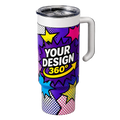
A tumbler is a wide-mouthed insulated drinkware vessel, typically cylindrical, designed for use with a straw or sip lid. The wide mouth makes it easy to add ice, clean thoroughly, and drink from comfortably. Most tumblers have a flat or tapered base designed to fit car cupholders. Common sizes range from 20oz to 40oz. The Stanley Quencher, YETI Rambler Tumbler, and similar products are the cultural reference points for this format.
What is an insulated bottle
An insulated bottle has a narrower mouth — typically designed for direct sipping or a chug lid — and a more uniform cylindrical shape designed to fit standard water bottle pockets on backpacks and gym bags. Common sizes range from 18oz to 32oz. Hydro Flask, YETI Bottle, and Nalgene-style products are the reference points for this format. Bottles are more associated with active use, outdoor activities, and on-the-go hydration than tumblers.
Head-to-head comparison across every key factor
| Factor | Tumbler | Bottle |
|---|---|---|
| Primary use context | Desk, car, daily carry | Gym, outdoor, active use |
| Mouth opening | Wide — easy ice, easy cleaning | Narrow — sip or chug lid |
| Cupholder fit | Designed for it | Varies — many do not fit |
| Backpack pocket fit | Often too wide | Designed for it |
| Print surface area | Larger — better for detailed designs | Smaller — better for clean simple logos |
| Gifting perception | Premium lifestyle product | Practical utility product |
| Social shareability | Very high — Stanley/Quencher aesthetic | Moderate |
| Best for hot drinks | Yes — wide mouth, sip lid | Depends on lid style |
| Best for cold drinks and ice | Yes — wide mouth accommodates ice easily | Narrow mouth makes ice loading awkward |
| Audience demographic | Broad — strong female skew in gifting | Active lifestyle — gym, outdoor, sports |
When a tumbler is the better branding choice
Tumblers have a clear edge in specific scenarios. These are the situations where choosing a tumbler over a bottle is the obvious call.
Office environments and desk use
Most people who work at a desk want a wide-mouth tumbler they can load with ice, stir easily, and drink from with a straw throughout the day. The tumbler format was built for this use case. A bottle with a narrow chug mouth is awkward at a desk — you have to tip your head back for every sip. If your audience spends significant time at desks, tumblers win decisively.
Corporate gifts and employee recognition
The tumbler format has stronger gifting perception in 2025 because of its cultural association with premium lifestyle products. Receiving a well-designed tumbler feels like receiving something you would buy for yourself. Receiving a bottle feels more utilitarian. For corporate gifting where you want the recipient to feel valued, the tumbler format communicates that more effectively.
Full-wrap designs and detailed branding
Tumblers have a larger, more consistent cylindrical print surface that accommodates full-wrap designs, detailed artwork, and complex branding better than most bottles. If your branding strategy involves a full-wrap design rather than a simple logo placement, the tumbler's surface gives you more room to work with and a more consistent result around the entire circumference.
Commuters and car culture
Tumblers are specifically designed to fit car cupholders — that was one of the defining features of the Stanley Quencher that drove its viral success. For brands whose audience spends significant time commuting, the cupholder-compatible tumbler is the format that fits their daily routine. A bottle that rattles around in a bag or does not fit a cupholder is used less consistently.
Social media and visual marketing
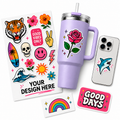
The tumbler aesthetic — particularly the skinny tumbler format — is extremely well-represented in social media content. People photograph their tumblers, film them in morning routine videos, and include them in flat lay product photos. If social shareability is part of your marketing strategy, the tumbler format gives your branded product a much better chance of appearing organically in content your recipients create.
When a bottle is the better branding choice
Bottles are not the wrong answer — they are the right answer for a specific audience and set of use cases that tumblers do not serve as well.
Active and outdoor audiences
If your audience includes people who hike, run, cycle, go to the gym, or spend time outdoors, a bottle fits their lifestyle in ways a tumbler does not. Bottles fit backpack side pockets, clip onto carabiners, and have lids designed for drinking on the move without spillage. For a fitness brand, outdoor company, or wellness-focused business, a bottle is more authentically aligned with what your audience actually does.
Hydration-focused health and wellness brands
The water bottle has a stronger association with health, hydration, and wellness than the tumbler — which is more strongly associated with coffee, cold drinks, and beverages generally. If your brand is a gym, a nutrition company, a wellness app, or a health-focused business, a custom bottle aligns more directly with the core message you are trying to communicate.
Sports teams and athletic organizations
Sports teams have used water bottles as branded merchandise for decades for good reason — they are the format athletes actually use during practice, games, and training. A custom bottle with a team logo on the sideline, in the locker room, and at games creates ongoing visible brand presence in exactly the right context. Tumblers work for sports fan merchandise; bottles work for the athletes themselves.
Conferences and large event giveaways
At large events where attendees are walking, carrying bags, and moving between sessions, a bottle that fits a bag pocket is more useful in the moment than a tumbler that takes up space in a tote. If your branded drinkware will be distributed at a conference and you want people to use it during the event itself, the portable bottle format wins the practical utility argument.
Can you order both — and when does that make sense
Some businesses order both formats intentionally for different purposes, audiences, or occasions. This is not inefficiency — it is segmentation. Here are the scenarios where ordering both makes clear strategic sense.
- Tiered corporate gifting — premium tumbler for senior employees and clients, practical bottle for broader employee distribution or conference giveaways
- Retail merchandise lines — a business selling branded drinkware can serve both the everyday lifestyle buyer (tumbler) and the active-use buyer (bottle) with the same brand applied to both formats
- Diverse team gifting — when gifting a large team with varied preferences and lifestyles, offering both and letting recipients choose increases the chance each person receives something they will actually use
- Events with multiple audiences — a health conference might distribute bottles to workshop participants and gift tumblers to speakers, sponsors, and VIP attendees
The verdict — which one should you order
If your audience is primarily office-based, the gift is meant to feel premium, your design is detailed or full-wrap, or the cultural moment of the product matters to you — order a tumbler.
If your audience is active, athletic, or outdoor-focused, the product will be used at an event or conference where portability matters, or your brand is in the health and wellness space — order a bottle.
If you are genuinely uncertain about your audience, the tumbler is the safer default in 2025. The cultural weight behind the tumbler format — driven by years of viral Stanley and YETI content — means it has broader demographic appeal and higher gifting desirability across most recipient types than the water bottle currently does.
The most important rule: choose based on your recipient's daily routine, not your own preferences. The best branded drinkware is the format that fits naturally into the life of the person receiving it — because that is the only version that gets used every day.
Frequently asked questions
Tumblers have surpassed bottles as the dominant format for corporate gifting in recent years, driven largely by the cultural success of Stanley, YETI, and similar lifestyle drinkware brands. Recipients tend to perceive tumblers as more of a premium lifestyle product than a utilitarian bottle. However, bottles remain a strong choice for active-lifestyle brands, fitness companies, and events where portability is the primary concern.
Tumblers generally have a larger and more consistent cylindrical print surface, which makes them better for full-wrap designs, detailed artwork, and complex branding. Bottles have a smaller available print area but work well for clean logo placements. For simple logo-forward branding, both work. For detailed full-wrap designs, the tumbler is the better canvas.
Both double-wall vacuum-insulated tumblers and bottles offer comparable temperature retention when made with quality materials. The lid design matters more than the vessel shape — a tighter-sealing lid reduces heat exchange more than the tumbler vs bottle distinction. Both formats in quality stainless steel construction will keep drinks cold for 8 or more hours under normal conditions.
A bottle is the stronger choice for a gym or fitness brand. Bottles fit backpack side pockets and gym bag water bottle sleeves, have lids designed for drinking during activity, and have a long-established cultural association with active hydration and fitness. A tumbler at the gym feels slightly out of place — a bottle fits naturally into the environment and the audience's existing habits.
Yes. Tawgraphix offers custom drinkware across multiple formats. You can order tumblers and bottles with the same branding for different audience segments, event types, or gifting tiers. There is no minimum order requirement, so ordering small quantities of both to test which your audience responds to is a practical option before committing to a larger run.


