






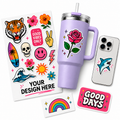


The biggest barrier to starting a custom apparel business used to be equipment — a heat press, a DTF or screen printing setup, space to run it, and the learning curve of operating it. DTF transfers remove that barrier entirely: you design, order pre-printed transfers, and press them onto blanks with equipment you can buy for a fraction of what a full print setup costs. Here's how to actually get started.
What You Actually Need
- A heat press — this is the one piece of equipment you can't skip, but entry-level home heat presses are a small fraction of the cost of a DTF printer, powder station, and curing setup
- Blank apparel — sourced from a wholesale blank supplier, not printed or produced by you
- DTF transfers — ordered pre-printed and ready to press, meaning no ink, no film, no powder, no printer maintenance on your end
- A design — your own artwork, or a design you have the rights to use commercially
That's the entire equipment list. No DTF printer, no powder shaker, no curing oven, no ventilation setup for chemical fumes — all of that stays with the print shop producing your transfers, not with you.
Sourcing Blank Apparel
Blank t-shirts, hoodies, and other apparel come from wholesale blank suppliers, sold undecorated and ready for printing. When picking a blank supplier, prioritize:
- Fabric composition — cotton, cotton/poly blends, and tri-blends each take DTF transfers slightly differently and have different feel/durability trade-offs worth testing before committing to a bulk blank order
- Consistent sizing — a supplier with size-to-size consistency matters more once you're fulfilling real customer orders and can't afford surprises
- Reorder reliability — a blank that gets discontinued mid-season forces you to either find a close match or reprint your whole design lineup on a different fit
Ordering Your First Transfers
Start small and test before committing to volume. A gang sheet (see our gang sheet sizing guide) lets you order a handful of different designs on one sheet, which is ideal for a first order where you're testing which designs actually sell rather than betting everything on one design.
Before ordering a full batch, do a test press on one blank per fabric type you plan to use — verify the transfer adheres cleanly, the colors look right against the fabric color, and the hand-feel is what you expect before you're committed to a full production run.
Pricing Your First Products
A basic cost structure to work from:
- Blank cost + transfer cost + your labor time (pressing, packaging, shipping) = your true cost per shirt
- From there, standard apparel markup ranges widely depending on design uniqueness, brand positioning, and market — research what similar independent sellers charge for comparable quality before setting your price, rather than guessing at a margin
Because DTF has no setup cost per design, you can price and test multiple designs simultaneously without the sunk cost that would come with committing to screen setup for each one — letting actual sales data tell you which designs to reorder rather than guessing upfront.
Where DTF Fits Long-Term
As volume grows, some sellers eventually bring printing in-house or move high-volume repeat designs to screen printing once they've proven demand (see our DTF vs screen printing comparison for when that crossover makes sense). But for testing a new business, a new design lineup, or running a business alongside a day job, DTF's no-equipment, no-minimum model removes nearly every barrier to actually starting.
Frequently Asked Questions
What equipment do I actually need to start a DTF t-shirt business?
A heat press and blank apparel — the DTF transfers themselves come pre-printed and ready to press, so no printer, powder station, or curing setup is needed on your end.
How many designs should I order for my first batch?
Start with a small mixed batch on one gang sheet to test which designs sell, rather than committing heavily to a single design before you have real sales data.
Should I test press a transfer before ordering a full run?
Yes — testing on one blank per fabric type confirms adhesion, color accuracy, and hand-feel before you commit to a larger production order.
Build your first gang sheet on the DTF Transfers page — no minimums, so it's easy to start small.