












Matte vs. Glossy: What Is the Difference?
Every printed product — a banner, a sign, a sticker, a foam board display, or a drinkware decoration — has a surface finish that affects how it looks, how it feels, and how it performs in its environment. The two most common finishes are matte and glossy, and the choice between them is one of the most frequently asked questions in custom printing. Understanding what each finish is, how each one behaves in different contexts, and what each one communicates visually makes the decision straightforward.
A glossy finish has a smooth, reflective surface that bounces light back toward the viewer. Colors appear more saturated and vivid under a gloss coating because the reflective layer intensifies the perceived brightness of the ink beneath it. A matte finish has a flat, non-reflective surface that diffuses light rather than reflecting it. Colors appear more subdued and natural, and the surface has a soft, tactile quality that gloss does not. Neither finish is universally better — each is the right choice in specific contexts, for specific applications, and for specific visual goals.
The finish choice is not just aesthetic — it is functional. Glossy prints reflect light, which makes colors pop in controlled lighting but creates glare problems in bright or multi-directional light environments. Matte prints eliminate glare at the cost of some color vibrancy, making them the better choice in environments where the print will be viewed from multiple angles or under strong ambient light. Matching the finish to the environment is as important as matching it to the aesthetic.
Glossy Finish: When It Works and When It Does Not
Glossy is the default finish expectation for most people who haven't thought about the choice specifically — it is the finish associated with professional photography prints, magazine pages, and product packaging. That association is earned: in the right context, glossy is genuinely the superior choice.
What Glossy Does Well
Glossy finishes produce the most vivid, saturated color reproduction available in print. The reflective coating amplifies perceived color brightness and contrast, making photographs look rich and deep, illustrations look vibrant, and brand colors appear at their most intense. For any print where color impact is the primary goal — a product display, a retail banner, a step and repeat backdrop, a UV DTF sticker applied to a product — glossy delivers a visual energy that matte cannot match. Glossy also provides a natural surface protection layer that resists moisture and minor abrasion better than uncoated matte surfaces, which is relevant for prints that will be handled frequently or exposed to humidity.
Where Glossy Falls Short
The reflective surface that makes glossy prints so vivid in controlled lighting becomes a liability in environments with multiple light sources, bright ambient light, or overhead fluorescent lighting — the conditions that describe most offices, trade show halls, retail stores, and event venues. Glare from a glossy surface can make the print difficult or impossible to read from certain angles, defeating the purpose of the sign or display entirely. Glossy prints also show fingerprints, smudges, and surface scratches more visibly than matte, which is a practical consideration for any print that will be touched or handled regularly. For large-format prints viewed at distance — banners, yard signs, storefront displays — the glare issue is most significant because the viewer cannot easily shift angle to avoid reflection.
Best Applications for Glossy Finish
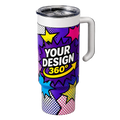
Glossy is the right choice for UV DTF stickers and product decoration (the reflective finish is part of the premium visual appeal), retail and product photography displays in controlled indoor lighting, step and repeat backdrops in photography-first event environments, and any print where color vibrancy is the dominant priority and the viewing environment is controlled. For drinkware decoration specifically, the glossy UV DTF finish is the standard — the thick, reflective coating is what gives UV DTF stickers and drinkware wraps their distinctive premium look that flat print processes cannot replicate.
Matte Finish: When It Works and When It Does Not
Matte finishes have a different visual language from glossy — quieter, more refined, and more legible across a wider range of lighting conditions. In many professional and high-end design contexts, matte is the deliberate choice rather than the default, because it communicates sophistication and intentionality that the universality of gloss does not.
What Matte Does Well
Matte finishes eliminate glare entirely, making them the correct choice for any print that will be viewed in bright or multi-directional lighting — office environments, trade show halls, retail floors under fluorescent lighting, and outdoor signage in direct sunlight. Text legibility is significantly better on matte surfaces than on glossy ones in most real-world viewing environments, because the diffuse surface presents text without the competing interference of reflected light. Matte finishes also photograph better in most conditions, which matters for any print that will be photographed for social media, marketing materials, or documentation — acrylic signs, event signage, and display pieces benefit from a matte or satin finish in photography-forward contexts. Matte surfaces resist fingerprints and smudges more effectively than glossy, keeping the print looking clean with regular handling.
Where Matte Falls Short
Matte finishes sacrifice color vibrancy relative to gloss — the diffuse surface scatters light rather than reflecting it, which produces a softer, less saturated color reproduction. For prints where maximum color impact is the goal — vibrant product photography, high-energy brand activations, bold illustration-based designs — matte reduces the visual punch that glossy delivers. Matte surfaces are also more susceptible to moisture damage and surface scuffing on uncoated substrates, though laminated matte finishes resolve this for most print applications. In very low-light environments, matte prints can appear flat and underlit where a glossy print would pick up ambient light and appear brighter.
Best Applications for Matte Finish
Matte is the right choice for acrylic interior signs in office and retail environments (where overhead lighting would create glare on a gloss surface), foam board display signs in trade show and event settings (where multi-directional ambient light makes glare control essential), outdoor vinyl banners in direct sunlight (where the matte surface reads more consistently across the viewing day as sun angle changes), and any print that will be read rather than admired — information-dense displays, directional signage, menu boards, and text-heavy presentations all benefit from the legibility advantage matte provides over gloss in real-world lighting conditions.
Finish Comparison by Product Type
The right finish choice depends on the specific product being printed, the environment it will be displayed in, and the visual goal it needs to achieve. This comparison maps finish recommendations across the most common custom print products.
| Product | Recommended Finish | Why | Exception Cases |
|---|---|---|---|
| UV DTF stickers | Glossy — standard | The thick glossy UV finish is intrinsic to UV DTF — it creates the premium 3D look that distinguishes UV DTF from vinyl decals | Matte UV DTF available for specific applications where a softer look is preferred |
| Drinkware decoration (UV DTF wraps) | Glossy — standard | Glossy finish on drinkware reads as premium and is the customer expectation for decorated tumblers and cups | Matte finish tumblers pair well with matte decoration for a deliberate brand aesthetic |
| Acrylic signs (indoor) | Matte or satin for readability; gloss for display/décor pieces | Indoor office and retail lighting creates glare on glossy acrylic surfaces viewed at close range; matte reads more cleanly | Reverse-printed acrylic with a gloss face produces a premium look in controlled display lighting |
| Vinyl banners (outdoor) | Matte | Direct sunlight creates strong glare on glossy vinyl that reduces legibility; matte reads consistently throughout the day | Indoor banner applications with controlled lighting can use gloss for color impact |
| Vinyl banners (indoor) | Gloss or matte depending on lighting | Controlled indoor lighting with a single direction source suits gloss; multi-directional or overhead fluorescent lighting suits matte | Photography-first event backdrops (step and repeat) should use gloss for color vibrancy in photography |
| Foam board signs | Matte | Foam board is most commonly used in multi-light event and trade show environments where glare control is essential for legibility | Display-oriented foam board props and décor pieces can use gloss for visual impact |
| Yard signs | Matte or satin | Outdoor sunlight creates extreme glare on glossy corrugated plastic; matte maintains legibility from a moving vehicle | Rarely — gloss on yard signs is generally not recommended for outdoor use |
| Custom magnets | Gloss | Magnets are handled and displayed on refrigerators where gloss protects the surface and keeps colors vivid; they are not typically read at close range under harsh lighting | Matte magnets for premium or minimalist brand aesthetics where the softer finish is intentional |
Finish Choice and Brand Identity: What Each Communicates
Beyond the practical considerations of glare, color vibrancy, and durability, finish choice communicates something about brand identity and positioning. This is one of the more nuanced aspects of print design, but it is real and it matters in contexts where brand perception is being actively managed.
- Glossy communicates: Energy, vibrancy, modernity, accessibility — the visual language of consumer product packaging, pop culture, and retail. Glossy is the right finish signal for brands that want to communicate excitement, boldness, and approachability
- Matte communicates: Sophistication, restraint, quality, and seriousness — the visual language of luxury product packaging, premium publishing, and high-end design. Matte is the right finish signal for brands that want to communicate refinement, credibility, and considered taste
- Satin (soft gloss) communicates: Balance — the tactile quality of matte with slightly more color vibrancy than flat matte; commonly used in premium print applications where full gloss is too stark but full matte is too flat
- Finish consistency across products: Using the same finish across all branded print products — signs, stickers, packaging, and displays — creates a cohesive brand aesthetic; mixing gloss and matte arbitrarily across different pieces creates visual inconsistency that communicates lack of design intentionality
- Intentional contrast: Some of the most effective print design uses both finishes deliberately in the same piece — a matte background with a spot gloss treatment on the logo or key graphic element creates a contrast that makes the gloss element pop dramatically against the flat background; this is a premium print technique used in high-end packaging and stationery
Finish Recommendations by Business and Application Type
The right finish varies by industry, application, and the environment in which the print will live. These are the most common business types and the finish approach that best serves their specific contexts.
Retail and Consumer Brands
Retail environments and consumer-facing brands generally favor gloss for product-facing displays, stickers, and packaging decoration because the vibrancy of gloss translates directly to shelf impact and purchase appeal. UV DTF stickers in gloss on product packaging, glossy banner displays at retail events, and gloss-decorated branded merchandise all communicate the energy and accessibility that consumer retail brands need. Interior signage — price displays, service menus, informational panels — benefits from matte to maintain legibility under the mixed lighting conditions of most retail floors. The practical approach for retail brands is gloss for anything primarily seen rather than read, and matte for anything primarily read rather than admired.
Corporate and Professional Services
Corporate and professional services environments — law offices, financial advisory firms, medical practices, consulting companies — are best served by matte or satin finishes across most print applications. The finish choice reinforces brand credibility: matte acrylic signs in reception areas, matte foam board displays at corporate events, and matte retractable banners at trade shows all communicate the refinement and professionalism that these audiences expect. The exception is branded drinkware — a glossy UV DTF decoration on a quality tumbler reads as premium regardless of the professional context, and the gloss finish on drinkware does not carry the same frivolous associations it might on a trade show banner.
Events and Entertainment
Events and entertainment contexts are the strongest home for gloss across all product categories. Step and repeat backdrops, event banners, drinkware sold at events, and UV DTF stickers as event giveaways all benefit from the high-energy visual impact of gloss in the photography-first, high-stimulation environment of events, concerts, and activations. The one exception is outdoor events in direct sunlight — outdoor event banners and yard signs for event wayfinding should use matte to maintain legibility as sun angle and intensity change throughout the event day.
Restaurants, Cafes, and Food Businesses
Food businesses occupy an interesting middle ground: product and menu photography benefits from gloss for appetite-stimulating color saturation, while the brand aesthetic of many quality food businesses — particularly independent coffee shops, farm-to-table restaurants, and artisan food producers — leans toward matte for its warmth and craft associations. The practical guidance for food businesses is to use gloss for product-facing decoration (stickers on jars and bottles, drinkware wraps, product packaging) where color impact drives purchase appeal, and matte for environmental and informational signage (menu boards, directional signs, event banners) where legibility and brand warmth matter more than vibrancy.
Outdoor and Service Businesses
Contractors, landscapers, home services, and outdoor businesses should default to matte for all outdoor print applications — yard signs, truck magnets, outdoor banners, and job site signage — because the South Florida sun and similar high-UV outdoor environments create extreme glare on glossy surfaces that makes signage illegible from the vehicle distances at which it needs to be read. Matte and satin finishes with UV-resistant inks maintain color and legibility over the long exposure durations that permanent and semi-permanent outdoor signage experiences. Browse the custom yard sign product page and the custom event banners collection for outdoor-rated options.
Finish Guidance for Specific Product Categories
For the specific product categories available through Tawgraphix, here is how finish considerations apply in practice — and what to expect from each product's default finish behavior.
UV DTF Stickers and Drinkware Decoration
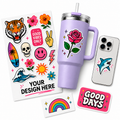
UV DTF prints have a naturally glossy surface that is intrinsic to the process — the UV-cured ink layer produces a thick, high-gloss finish that is part of what makes UV DTF stickers look and feel premium compared to standard vinyl decals. The gloss is not a laminate applied over the print; it is the cured ink surface itself. For product decoration on tumblers, bottles, and hard surfaces, this gloss finish is the standard expectation and the correct choice for most applications. For drinkware specifically, always hand wash decorated pieces with mild soap — the UV DTF coating is durable but dishwasher heat, harsh detergents, and mechanical agitation degrade it over time. A care card included with every decorated drinkware order protects the decoration quality and keeps the finish looking premium for years. Browse the UV DTF stickers collection or build a custom layout with the UV DTF gang sheet builder.
Acrylic Signs
Acrylic substrate itself has a naturally glossy surface — the material is inherently shiny. For display and décor-oriented acrylic pieces — awards, keepsakes, lobby displays in controlled lighting — the natural gloss of the acrylic material is appropriate and contributes to the premium look. For information-oriented acrylic pieces — wayfinding signs, service menus, directional displays — the gloss can create legibility issues under overhead or mixed lighting, and a UV matte print on acrylic or a frosted acrylic substrate addresses this. Reverse-printed acrylic (where the design is printed on the back face and the clear acrylic surface is the front) produces a glass-like depth that is distinct from surface printing — the design is protected by the acrylic layer and the gloss of the material face enhances rather than interferes with the print. Browse available formats in the acrylic signs collection.
Vinyl Banners and Foam Board Signs
Vinyl banners for outdoor use are best ordered with a matte or satin surface finish — outdoor sunlight creates significant glare on glossy vinyl that reduces legibility from the distances and angles at which banners are typically read. For indoor banners in controlled single-direction lighting, gloss increases color vibrancy and visual impact. Foam board signs in most event, trade show, and retail environments should use matte for legibility under multi-directional ambient lighting. For display-oriented foam board props and décor pieces where visual impact matters more than text legibility — event backdrops, shaped display pieces, photo props — gloss is appropriate. Browse available formats in the custom event banners collection and the custom foam boards collection.
Frequently Asked Questions
For most real-world sign applications — indoor office and retail environments, trade show displays, outdoor signage in direct sunlight, and any setting where the sign will be read under multi-directional or overhead lighting — matte is the better choice. Matte eliminates the glare that makes glossy signs difficult to read from certain angles, and the text legibility advantage of a non-reflective surface is significant in the fluorescent-lit environments where most indoor signage is displayed. Glossy is the better choice for signs in controlled single-direction lighting environments, photography-first applications like step and repeat backdrops, and display-oriented pieces where color vibrancy is more important than glare-free legibility.
For outdoor banners, choose matte. Direct sunlight creates significant glare on glossy vinyl that reduces legibility — particularly from the vehicle and pedestrian distances at which most outdoor banners are read. Matte outdoor banners maintain consistent legibility as sun angle changes throughout the day. For indoor banners, the choice depends on the lighting environment: in controlled single-direction lighting (like a gallery wall or a specific spotlight), gloss increases color vibrancy and visual impact. In overhead fluorescent or multi-directional ambient lighting — trade show halls, retail floors, event venues — matte maintains the legibility advantage. When in doubt for indoor applications, matte is the safer choice because it performs consistently across a wider range of lighting conditions than gloss.
For UV DTF stickers applied to product packaging, tumblers, and hard surfaces, glossy is the standard and recommended finish — the thick UV gloss coating is intrinsic to the UV DTF process and is part of what makes these stickers look and feel premium. For decorative and display stickers where a softer, more refined aesthetic is preferred — wellness brands, luxury packaging, minimalist brand identities — matte UV DTF is available and communicates a more restrained visual personality. The practical consideration is application surface: glossy stickers applied to matte surfaces create a visible contrast between the sticker and the base material, which can look deliberate and premium or inconsistent depending on the design. Matching the sticker finish to the packaging surface finish is the most coherent approach when both are available as options. Browse the UV DTF stickers collection for available options.
For outdoor applications, laminated matte finishes with UV-resistant inks typically outperform standard gloss in longevity because the matte surface is less susceptible to UV degradation visible as yellowing or surface cracking over time. For indoor applications, both finishes perform comparably when properly laminated — the substrate and laminate quality matter more than the finish type for longevity. For handled products like stickers and drinkware decoration, the glossy UV DTF coating is highly durable because it is a cured resin layer rather than a surface treatment — but it should be hand washed rather than put through a dishwasher, which degrades the coating over time regardless of finish type.
The right finish for an acrylic sign depends on its purpose and location. Reverse-printed acrylic signs — where the design is printed on the back face and viewed through the clear acrylic — produce a glass-like, naturally glossy depth that looks premium in controlled indoor lighting and is ideal for display, décor, and award applications. For information-oriented acrylic signs displayed under overhead fluorescent lighting — office directories, service menus, wayfinding signs — a matte or frosted surface finish reduces glare and improves text legibility. For decorative and brand identity pieces in lobbies, retail environments, and photography-forward settings, the natural gloss of clear acrylic is appropriate and desirable. Browse the acrylic signs collection for available formats.
For most branded drinkware applications, glossy UV DTF decoration is the standard and produces the premium look customers expect — the thick, reflective finish makes colors vivid and gives the decoration a depth and quality that flat print processes cannot match. For brands with a deliberate matte aesthetic — minimalist wellness brands, luxury lifestyle brands, or any brand where the overall product palette skews matte — a matte tumbler blank with matte decoration creates a cohesive, refined look that communicates intentional design. The most important care consideration for either finish on UV DTF-decorated drinkware is the same: hand wash only with mild soap. Dishwasher heat, harsh detergents, and mechanical agitation degrade both glossy and matte UV DTF decorations significantly faster than hand washing. Always include a care card. Use the custom tumbler designer to preview your design, or browse the custom drinkware collection.
Yes — mixing matte and glossy finishes on the same piece is a premium print technique called spot UV or selective gloss, where specific elements (a logo, a key graphic, a headline) receive a gloss coating over a matte background. The contrast between the flat background and the reflective spot element creates a tactile and visual effect that makes the gloss element pop dramatically without the glare problems of an all-gloss surface. This technique is used extensively in high-end packaging, business cards, and premium stationery. For large-format prints like banners and signs, selective finish treatments are less common due to production complexity, but for smaller format products like stickers, magnets, and packaging, spot gloss treatments are available and produce distinctive results worth discussing with your print vendor.
Matte is the correct finish for outdoor signs and yard signs in almost all cases. Direct sunlight creates strong glare on glossy corrugated plastic and glossy vinyl, making the sign difficult or impossible to read from the viewing distances and angles at which outdoor signage is typically seen — passing vehicles, pedestrian traffic, and neighborhood walkers. Matte finishes diffuse the sunlight rather than reflecting it, maintaining consistent legibility as sun angle changes throughout the day. UV-resistant inks on matte outdoor substrates also hold color better over extended outdoor exposure than glossy coatings that can crack or yellow under sustained UV. For outdoor signage in Miami's high-UV environment specifically, matte and UV-rated materials are particularly important. See the custom yard sign product page for available options.


