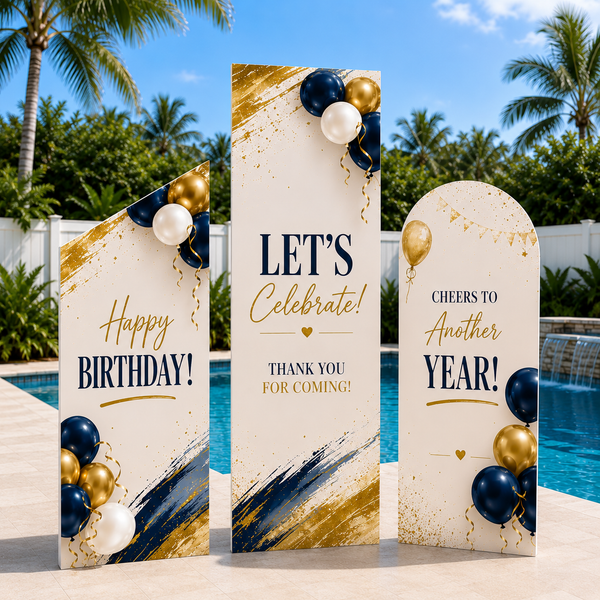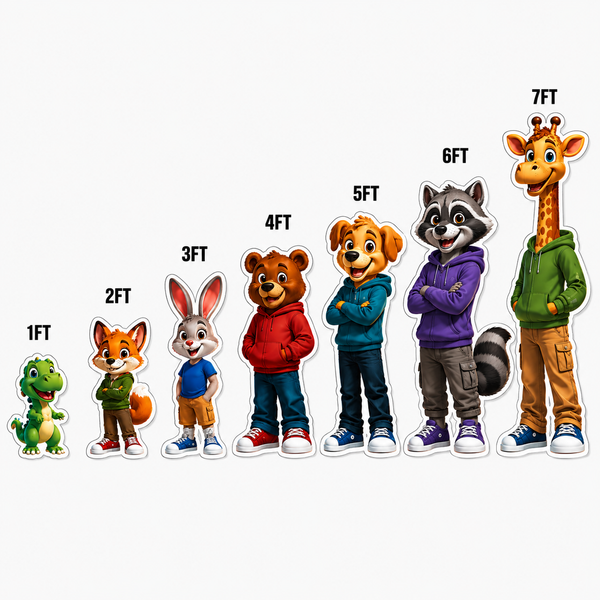




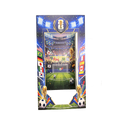






Foam board display panels are large-format printed graphics mounted on a rigid foam core substrate — a lightweight sandwich of polystyrene foam bonded between two smooth facing sheets. The result is a panel that is stiff enough to stand on its own with the right support, light enough to carry and reposition without equipment, and printable in full color at high resolution. For anyone who needs a professional-looking display without the weight, cost, or permanence of harder materials, foam board panels are the practical standard.
They show up everywhere: trade show booths, event backdrops, retail point-of-purchase displays, school and science fair presentations, museum exhibits, real estate open houses, and corporate conference environments. The common thread is that all of these applications need a display that looks finished, installs quickly, and doesn't need to last forever. That's exactly what foam board delivers. When you're ready to order, custom foam boards from Tawgraphix are available in a range of sizes with full-color printing.
Foam board panels are an indoor-only display material. Moisture warps the core and degrades the facing — even a single humid day can permanently damage a panel. Plan all foam board displays for controlled interior environments.
Common Uses for Foam Board Display Panels
Trade Show and Exhibition Displays
Foam board panels are a staple of trade show booths. They're lightweight enough to pack in a carry bag, set up without tools, and produce full-color graphics that look professional at booth scale. A set of foam board panels covering the back wall of a 10x10 booth creates a branded environment at a fraction of the cost of fabric or hard panel display systems. They're disposable after the event, which eliminates the cost and hassle of shipping display hardware back from out-of-town shows.
Event Backdrops and Photo Walls
Large foam board panels assembled side by side create seamless event backdrops for photo opportunities, sponsor walls, and branded environments at conferences, galas, product launches, and corporate events. Multiple panels tiled together can cover a full wall. With proper support — easels, panel stands, or leaning against a wall — they hold flat and photograph cleanly.
Retail Point-of-Purchase Displays
Retailers use foam board panels for seasonal promotions, product launch displays, end-cap signage, and floor-standing POP graphics. They install quickly with adhesive or floor stands, can be swapped out between campaigns without damaging walls, and cost far less than permanent printed fixtures. For promotions that change monthly or seasonally, foam board is the right material.
Corporate and Conference Environments
Conference rooms, seminar spaces, and corporate event venues use foam board panels for speaker backdrops, agenda displays, directional signage, and sponsor recognition walls. They set up and break down in minutes, which matters in venue environments where setup time is tight and the space needs to turn over quickly.
Real Estate Open Houses and Property Marketing
Real estate agents use foam board panels for floor plan displays, neighborhood maps, property feature boards, and branded open house signage inside properties. The panels are easy to carry between properties, stand on easels without wall mounting, and present professionally without requiring permanent installation in a home that's for sale.
Education, Science Fairs, and Museums
Foam board has been the standard material for educational displays, science fair projects, and museum exhibit panels for decades. It's easy to work with, accepts both printed and hand-applied graphics, and can be cut to size. Museum-grade foam board with archival facing is available for applications that need to last longer than a standard event.
Standard Sizes and Panel Configurations
Foam board panels are available in a wide range of standard sizes, and most print suppliers — including Tawgraphix — also produce custom dimensions. The right size depends on the display environment, how the panels will be supported, and whether they need to tile together into a larger graphic.
Common single-panel sizes range from 18x24 inches for tabletop and easel displays up to 48x96 inches for large-format wall panels. The most practical trade show and event sizes are 24x36 inches and 36x48 inches — large enough to make a visual impact, manageable enough for one person to carry and position. For tiled multi-panel displays, consistent panel widths with clean seams between them produce the most professional result.
Thickness matters for rigidity. Standard foam board is 3/16 inch thick, which is adequate for smaller panels and easel-mounted displays. Larger panels — anything over 24x36 inches — benefit from 1/2 inch foam board, which resists bowing under its own weight and stays flat against a wall or stand. If panels will be handled repeatedly across multiple events, the thicker substrate is worth the modest additional cost.
For tiled multi-panel displays, design the full graphic in one file and divide it into panels at exact equal widths. Even a millimeter of misalignment between panels is visible when the graphic is assembled. Most print suppliers can output a multi-panel set from a single large file — confirm this before designing.
Mounting and Support Options
Foam board panels are light enough that mounting is straightforward, but the right method depends on the specific display situation. Each option has trade-offs in terms of stability, wall damage, and reusability.
| Mounting Method | Best For | Reusable | Wall Damage | Tools Required |
|---|---|---|---|---|
| Easel / Panel Stand | Freestanding event displays, trade shows | Yes | None | None |
| Adhesive Strips (Command) | Temporary wall mounting, rentals | No | Minimal | None |
| Push Pins / T-Pins | Soft wall surfaces, fabric-covered boards | Yes | Small holes | None |
| Foam Tape / Double-Sided | Permanent or semi-permanent wall mounting | No | Moderate | None |
| Panel Grid System | Large tiled multi-panel displays | Yes | None | Minimal |
| Lean Against Wall | Temporary event use with tall panels | Yes | None | None |
Design Tips for Foam Board Display Panels
Foam board panels are viewed from a distance in most display contexts — a trade show visitor standing several feet away, a conference attendee reading from across a room. Design decisions that work for close-up print materials don't always translate to large-format display panels. The priorities shift toward legibility, visual impact at distance, and clean hierarchy.
- Use a minimum font size of 24pt for body text on panels viewed from 6 feet or more — smaller text disappears at trade show distances
- Lead with a bold headline that communicates your key message in under seven words — people scan displays, they don't read them
- Use high-contrast color combinations — dark text on light backgrounds or light text on dark backgrounds; avoid mid-tone on mid-tone pairings
- Submit files at 150 DPI at full print size — large-format printing doesn't require 300 DPI the way small-format does because viewing distance increases
- Include a bleed of at least 0.125 inches on all sides — panels are trimmed after printing and a bleed prevents white edges from appearing at the border
- For multi-panel tiled displays, add a small overlap to adjacent panel edges in your design — this ensures a clean join even if panels shift slightly during assembly
- Avoid placing critical text or graphics within half an inch of any edge — these areas are at risk from handling damage and trim variance
Foam Board vs. Other Display Materials
| Material | Weight | Durability | Outdoor Use | Cost | Best For |
|---|---|---|---|---|---|
| Foam Board | Very light | Short–medium term | No | Low | Indoor events, trade shows, POP |
| Acrylic | Medium–heavy | Long term | Limited | High | Permanent indoor signage |
| Coroplast (yard sign) | Light | Medium term | Yes | Low–medium | Outdoor temporary signage |
| Vinyl Banner | Very light | Medium term | Yes | Low–medium | Outdoor events, storefronts |
| Fabric Display | Very light | Long term | Limited | Medium–high | Repeated trade show use |
Frequently Asked Questions
For a standard 10x10 foot trade show booth, most exhibitors use either a single large panel (48x96 inches) or a set of three to four 24x36 or 36x48 inch panels arranged side by side across the back wall. The right configuration depends on how you want the graphic to work — a single seamless image across the full back wall reads more like a branded environment, while individual panels give you flexibility to rearrange or replace single pieces between events. Make sure your panel height accounts for the booth's back wall height, which varies by show.
Yes, with care. Foam board panels can be reused multiple times if they're stored flat, protected from moisture, and not subjected to impact or pressure that dents the surface. The main threats to foam board longevity are corner damage from handling, denting from stacking without protective layers in between, and moisture exposure that warps the core. For panels used repeatedly across events, store them in a flat, dry location between uses and transport them in a protective sleeve or foam bag. If a panel gets a corner dent or surface scuff, it's typically cheaper to reprint than repair.
For large-format foam board panels, 150 DPI at the final print size is the standard — not 300 DPI as required for small-format print. Large panels are viewed from a distance where the extra resolution of 300 DPI isn't perceptible, and working at 150 DPI keeps file sizes manageable. If your panel is very large (48x96 inches or bigger), some suppliers work at 72–100 DPI at full size. Confirm the required resolution with your print supplier before building the file, especially for oversized panels.
Bowing is most common on large panels printed on one side only — the ink layer on the front creates tension that causes the panel to curve toward the printed face. Using thicker foam board (1/2 inch instead of 3/16 inch) significantly reduces bowing on large panels. Mounting the panel flat against a wall or using a panel stand that holds the edges reduces visible bow during display. Storing panels flat rather than standing upright also prevents long-term warp from gravity and uneven support.
Yes — laminating a foam board panel adds a protective layer over the printed surface that resists scuffing, fingerprints, and light moisture. Gloss laminate makes colors pop and is easy to wipe clean. Matte laminate reduces glare under event lighting and looks more premium for certain display contexts. Lamination adds a modest cost per panel and is worth it for any panel that will be handled, touched by visitors, or reused across multiple events. Ask your print supplier about laminate options when ordering.
Gatorboard (also called gator foam or sintra foam board) uses a harder, denser foam core and a rigid plastic or wood-fiber facing instead of paper. It's significantly more durable than standard foam board — resistant to denting, moisture damage, and edge wear — and holds up to repeated handling across many events. The trade-off is cost: gatorboard runs two to four times the price of standard foam board per panel. For panels used once or twice, standard foam board is the right call. For display panels reused regularly over a long period, gatorboard's durability justifies the premium.
Visit the custom foam boards collection, select your size, and upload your print-ready artwork file. Submit at 150 DPI at the full print size in PDF or PNG format with bleed included. If you need a custom size outside the standard offerings or have a multi-panel tiled display, reach out before ordering to confirm the best approach for your specific setup.